
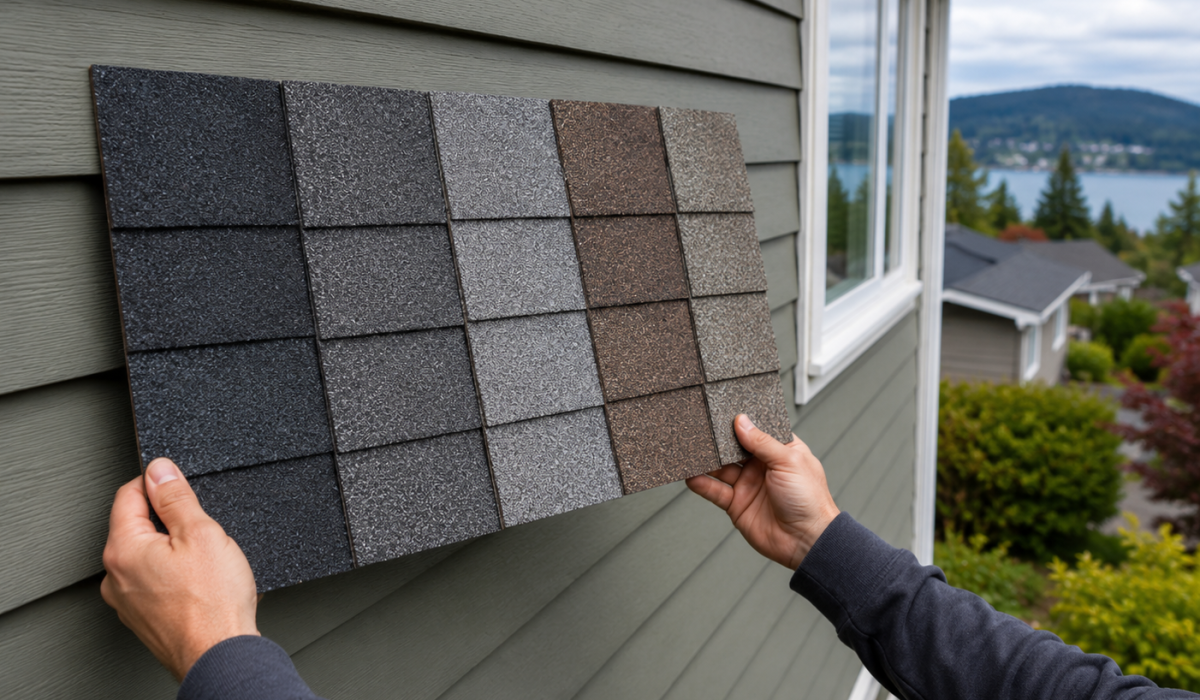
Shingle color decisions tend to focus almost entirely on how it looks against the house, which is completely reasonable, it is a highly visible choice you will live with for decades. But color also affects a few practical things worth knowing before you settle on a swatch, attic heat, how visible algae streaking becomes over time, and how the choice is perceived at resale.
How color affects attic heat
Darker shingles absorb more solar heat than lighter ones, which translates to a warmer attic space during sunny stretches, more relevant to summer cooling costs than to our wetter winter months here. On a well-ventilated attic with adequate insulation, this difference is generally modest and not a major factor in the decision. On a roof with known ventilation issues, discussed in more detail in our attic ventilation article, a darker shingle color can meaningfully compound an existing heat and moisture problem, which is worth factoring in if ventilation is already a known weak point on your specific roof.
Algae streaking visibility
Algae streaking, the dark discoloration common on Victoria roofs given our humidity and tree cover, shows up more visibly on lighter colored shingles than darker ones, simply due to contrast. This does not mean algae grows more on light shingles, it grows at similar rates regardless of color, but the visual impact is more noticeable and can make a lighter roof look aged faster even when the underlying shingle condition is comparable to a darker roof of the same age. Algae-resistant shingle lines, which incorporate copper granules to resist this staining, are worth considering regardless of color choice, but particularly so if you are set on a lighter shade.
Heat and moss growth patterns
Slightly counterintuitively, darker shingles that run somewhat warmer can see marginally less moss establishment in shaded areas compared to lighter shingles staying cooler and damper longer, though this effect is generally minor compared to the bigger factors driving moss growth, shade and moisture, covered in our moss and algae prevention guide. Color is a secondary factor here at best and should not be the deciding consideration for moss management specifically.
Resale and neighbourhood considerations
Shingle color affects how a home is perceived at resale more than most homeowners initially expect. Colors that align reasonably well with common palettes in your specific Victoria neighbourhood tend to support resale value better than a highly unusual color choice that some future buyers may find harder to picture themselves living with. This does not mean choosing purely for resale over your own preference, but it is worth a quick look at what colors are common on nearby homes if resale value in the coming years is any part of your thinking.
Heritage-designated homes or those in established character neighbourhoods sometimes have specific guidelines or strong community expectations around exterior colors, including roofing, worth checking with the municipality or any relevant heritage association before finalizing a choice on this kind of property.
Matching existing exterior elements
Beyond general aesthetic preference, shingle color needs to work with existing fixed elements that are expensive or impractical to change, brick or stone accents, existing trim colors, and any other roofing already visible on attached structures like a garage. Bringing a physical shingle sample to view against your home’s actual exterior in daylight, rather than relying on a small swatch or a photo under different lighting, gives a much more accurate sense of how a color will actually look once installed.
Color trends versus timeless choices
Roofing color trends do shift gradually over the decades, and while a trendy color can look great when fresh, a more classic, neutral tone tends to age better visually over the roof’s full multi-decade lifespan than a color chosen specifically because it was fashionable at installation. This is worth weighing against personal preference, since a roof is a much longer-term commitment than something like exterior paint that can be redone every several years without major expense.
How lighting and surrounding landscape affect perceived color
A shingle color can look noticeably different depending on surrounding tree cover, nearby structures casting shade, and even the specific angle sunlight hits the roof through the day. A color that looks warm and rich in a sample photo taken in bright, direct sun might read as considerably cooler or flatter under the dappled shade common on a tree-lined Victoria street. This is one more reason physical samples viewed on site, rather than photos or swatches alone, give the most accurate sense of the final result.
Multi-tone and dimensional shingle options
Many modern shingle lines offer multi-tone or dimensional color blends rather than a single flat color, which can add visual depth and sometimes hide minor algae staining or debris better than a completely uniform single-tone shingle. These blended options are worth considering alongside straightforward solid colors, particularly for homeowners wanting a roof that photographs and ages a bit more forgivingly over the years.
Practical testing before committing
- View physical shingle samples against your home’s actual siding and trim in natural daylight
- Check the color at different times of day, since roofing color can look noticeably different in morning versus late afternoon light
- Look at completed homes in your area with the color you are considering, if your contractor can point you to any
- Factor in ventilation condition if choosing a darker shade on a roof with known attic heat or moisture concerns
- Consider an algae-resistant product line regardless of color, particularly for lighter shades
Frequently asked questions
Does shingle color meaningfully affect energy bills in Victoria’s climate?
Less than in a hotter, sunnier climate, though a well-ventilated attic paired with a darker shingle still runs somewhat warmer in summer than a lighter one. The effect is real but generally modest here compared to more extreme climates where roof color is a bigger energy factor.
Do algae-resistant shingles cost significantly more?
There is a modest cost premium over standard shingles, but it is generally minor relative to the overall reroof cost and can meaningfully reduce visible algae staining over the roof’s lifespan, particularly worthwhile on lighter colored shingles where staining shows most.
Can I see how a color will actually look before committing?
Viewing physical samples against your home in daylight is the most reliable method. Some contractors can also point you to completed local projects using a color you are considering, which gives a better real-world sense than a swatch alone.
Should I choose a color based on what is popular in my neighbourhood?
It is worth considering if resale value matters to you, though it should not override your own preference entirely. A reasonable middle ground is choosing a color you like that also falls within the general range of tones common nearby, rather than an extreme outlier in either direction.
Do trendy roof colors age well over the roof’s full lifespan?
Not always. A classic, neutral tone tends to look reasonable for longer than a color chosen mainly for being currently fashionable, which is worth weighing given how long a roof typically stays in place compared to something more easily updated like exterior paint.
Why does my shingle sample look different on the roof than it did as a swatch?
Lighting conditions, surrounding tree shade, and viewing angle all affect how a color reads in practice, which is why physical samples viewed on site in actual daylight give a far more accurate sense than a small swatch or photo alone.
If you want to compare shingle color samples against your specific home before your reroof, Shoreline Roofing can bring samples out during your estimate visit.