
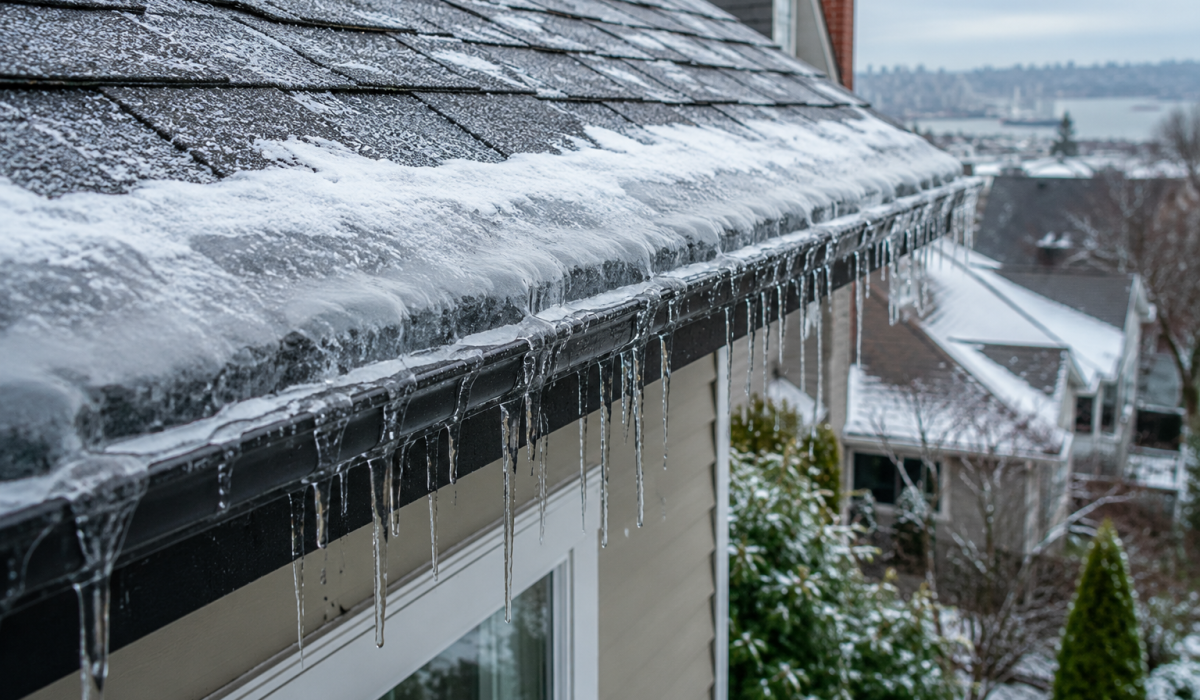
Ask someone from Winnipeg about ice dams and they’ll shrug. Their roofs are built for it, their attics are set up for it, and they’ve seen it every winter of their lives. Ask someone in Victoria and you’ll often get a blank look, right up until the one week a year when an Arctic outflow parks over the Island, snow actually sticks, and water starts showing up above the living room window.
That’s the strange thing about ice damming here. It’s rare enough that most homes were never seriously prepared for it, but it happens often enough, usually once or twice a winter, that it does real damage when it comes. And because Victoria snow almost always arrives wet, melts fast, and refreezes overnight, our cold snaps can produce textbook ice dams in just a few days.
What an Ice Dam Actually Is
The mechanics are simple once you see them. Snow lands on your roof. Heat escaping from your house warms the upper roof surface and melts the snow from underneath. That meltwater runs down the roof until it reaches the eaves, the overhang past your exterior walls, where there’s no heat below and the surface is still frozen. The water refreezes there, and a ridge of ice starts to build.
That ridge is the dam. Once it’s tall enough, the next round of meltwater can’t get past it. It pools behind the ice, and pooled water on a sloped shingle roof is a problem, because shingles are designed to shed running water, not hold standing water. The pool creeps uphill, works under the shingle edges, and finds its way into the roof deck, the insulation, and eventually your ceilings and walls.
The icicles hanging off the eaves are the visible part. The pool behind them is the part that costs money.
Why It Happens in Victoria Specifically
Our version of ice damming has a local flavour, and understanding it helps you see whether your home is at risk.
Wet, heavy snow. Victoria snow arrives warm and sticky, sitting right at the melting point. That means lots of meltwater from day one, which is exactly what feeds a dam.
Freeze-thaw cycling. A classic Island cold snap gives you daytime melt and hard overnight freezes, sometimes for a week straight. Each cycle adds another layer to the ice ridge.
Attics that were never built for it. This is the big one. Many Victoria homes, especially the older character stock, have marginal attic insulation and ventilation. A warm, leaky attic melts roof snow quickly and unevenly, which is the perfect setup for damming. Homes in colder parts of Canada handle snow better partly because their attics stay cold. Ours often don’t.
Clogged gutters going into winter. Gutters full of fall debris freeze into a solid block, giving the ice dam a head start and nowhere for meltwater to drain. If your gutters weren’t cleared after leaf drop, you’re beginning the cold snap already halfway to a dam.
How to Tell If Your Roof Is Prone to It
You don’t have to wait for snow to find out. A few signs point to a roof that will dam when the cold arrives:
- Icicles along the eaves during past cold snaps, especially thick ones. Icicles look festive, but they’re evidence that meltwater is reaching a frozen edge, which is the damming process in miniature.
- Uneven snow melt on the roof, with bare patches up high while the eaves stay white. That pattern means heat is escaping into the attic and melting from below.
- A history of water stains near exterior walls or above windows that appear specifically after snowy spells.
- A warm attic in winter. If your attic feels noticeably warmer than outside on a cold day, heat is getting up there, and it will melt snow.
- Gutters that tend to be full going into December.
Any two of these together and it’s worth acting before the next outflow arrives, not after.
Preventing Ice Dams: What Actually Works
The satisfying part is that ice dam prevention overlaps almost entirely with things that are good for your roof anyway.
Fix the attic first. A cold, dry, well-ventilated attic is the single best defence, because it keeps the whole roof surface at roughly the same temperature and stops the melt-from-below cycle before it starts. That means sealing air leaks from the house into the attic, topping up insulation, and making sure ventilation moves air from the soffits to the ridge. Our attic ventilation article covers this in detail, and it’s the same fix that protects your roof from moisture damage the rest of the year.
Clear the gutters before winter. A clean gutter and downspout system gives meltwater somewhere to go during the thaw phase of each cycle. It won’t stop a dam on its own, but full gutters make every other risk factor worse.
Ice and water shield at the eaves. During a reroof, a self-sealing membrane installed along the eaves, valleys, and penetrations is your insurance policy. It won’t stop a dam from forming, but if water does pool behind one, the membrane keeps it out of the deck. This is standard good practice in Victoria now, and it’s one of those quote line items worth confirming before you sign.
Careful snow removal when it counts. During a heavy snow event, pulling snow off the lower few feet of roof with a roof rake from the ground removes the fuel before it can melt and refreeze. From the ground is the key phrase. Nobody should be on a snowy Victoria roof, and hacking at formed ice with tools damages shingles and rarely helps.
If You Already Have a Dam and Water Coming In
First, treat the indoor side like any active leak. Contain the water, move belongings, and keep an eye on any bulging ceiling. Our emergency leak guide walks through those steps.
For the dam itself, resist the urge to chip at the ice. Shingles are brittle in the cold and easy to wreck, and the ice is bonded to them. Safer options include laying calcium chloride (not rock salt, which harms plants and can corrode metal) in a sock or stocking across the dam to melt a drainage channel, and removing snow above the dam with a rake so it stops feeding. Then get a roofer to assess once things thaw, because water that got under the shingles may have wet the deck and insulation even if the dripping has stopped.
FAQ
Is ice damming really worth worrying about in Victoria’s mild climate?
For most of the winter, no. For the one or two cold snaps a year, yes, precisely because so few local homes are prepared for it. A single week-long outflow event can push water into a house that has never leaked before.
Do heated eave cables work?
They can help on roofs with a stubborn recurring dam problem, but they treat the symptom rather than the cause and add operating cost. Fixing attic insulation and ventilation solves the underlying issue and pays off year-round, so it’s the better first move for most homes.
Will my insurance cover ice dam damage?
Often yes, since it’s typically treated as sudden weather-related damage, but policies vary and documentation matters. Photograph everything, keep records, and report promptly. Long-standing maintenance issues that contributed, like known attic problems, can complicate a claim.
Can new gutters or gutter guards prevent ice dams?
They help the drainage side of the equation but won’t prevent damming on their own, since the dam forms on the roof surface at the eaves, not just in the gutter. Clean, functional gutters are one piece of prevention, not the whole answer.
Get Your Roof Ready Before the Next Cold Snap
The homes that come through a Victoria cold snap dry are the ones with cold attics, clear gutters, and membrane protection at the eaves. All three are fixable in the mild months, and all three are much cheaper than the interior repairs a dam leaves behind.
Shoreline Roofing has spent more than 30 years looking after roofs across Greater Victoria, including plenty of post-cold-snap calls we’d rather have prevented. If your roof has shown any of the warning signs above, or you simply want to know where you stand before winter, we’re happy to come take a look and tell you honestly what, if anything, needs doing. Reach out anytime to book an assessment.