
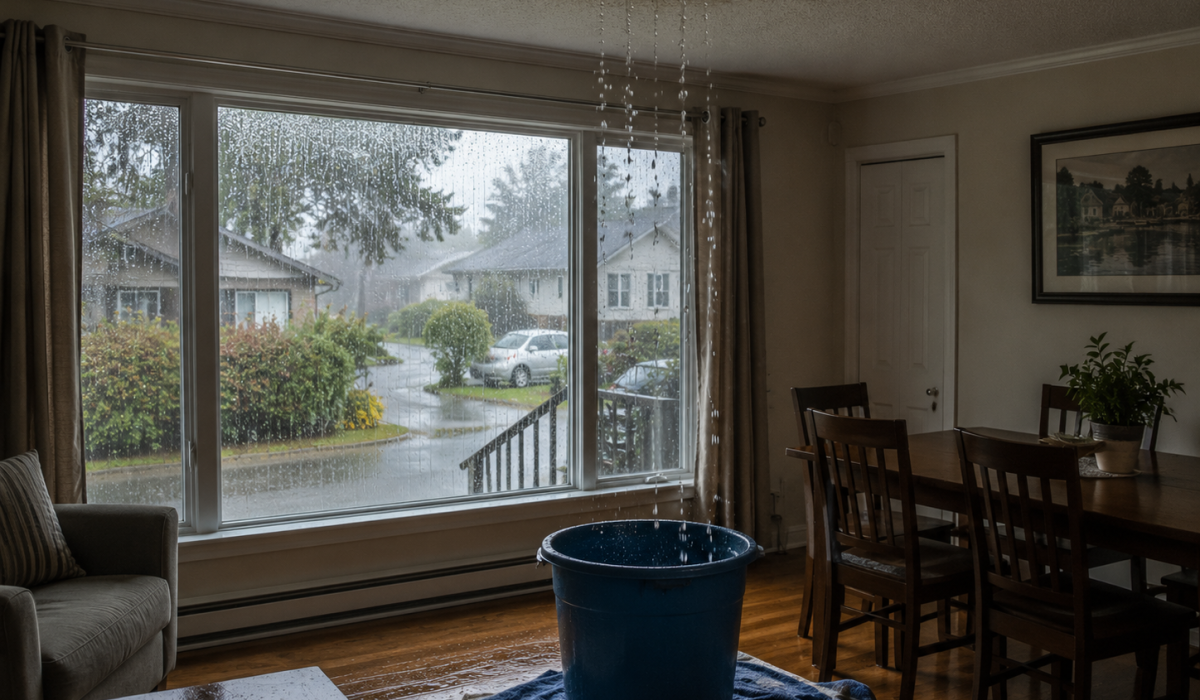
If water is coming through your ceiling right now, here is the short version. Move your belongings out of the way, put a container under the drip, ease the pressure on your ceiling if it is bulging, stay off the roof, and call a roofer. The detail below walks you through each step, but those first moves matter most, so start there while you read.
Victoria’s fall and winter storms put real pressure on roofs. Long stretches of heavy coastal rain find every weak spot, and a small flaw that stayed quiet all summer can turn into an active leak overnight. If that is happening to you, you are not alone, and you are not stuck. This guide tells you exactly what to do to limit the damage, how to tell whether it is a middle-of-the-night emergency or something that can wait until morning, and what to expect when help arrives.
The First 5 Things to Do When a Roof Leaks During Rain
When you spot a leak, act in this order:
Protect your belongings. Move furniture, electronics, and anything valuable out from under the leak. Cover what you cannot move with plastic sheeting or a tarp.
Contain the water. Place a bucket, bin, or large pot under the drip. Lay towels around it to catch splashing, and swap containers before they overflow.
Relieve a bulging ceiling. If part of your ceiling is sagging or bulging with trapped water, place a bucket underneath and carefully pierce the lowest point of the bulge with a screwdriver to let it drain in a controlled way. This prevents a sudden, larger collapse.
Document everything. Take photos and videos of the leak, the water, and any damage. You will want these for your insurance claim later.
Call a roofer. Get a professional on the phone. The sooner a roofer knows, the sooner the leak can be assessed and stopped.
How to Protect Your Home’s Interior While You Wait
Even once help is on the way, there are things you can do indoors to limit the damage in the meantime:
Keep containers emptied so they do not overflow and spread water further.
Move rugs and soft furnishings well away from the affected area, since water wicks across floors faster than you expect.
If water is near outlets, light fixtures, or your electrical panel, shut off power to that area at the breaker. Water and electricity together are a serious hazard.
Open a window slightly in the affected room if it is safe, to help with airflow and reduce moisture buildup once the worst has passed.
Keep an eye on the ceiling for new bulges or spreading stains, which tell you the leak is moving.
Why You Should Not Go On the Roof Yourself in Wet Weather
It is tempting to grab a ladder and try to find the source, but climbing onto a wet roof during a storm is one of the most dangerous things you can do. A rain-soaked roof is extremely slippery, visibility is poor, and wind makes balance harder. Falls from roofs cause severe injuries every year, and a storm is the worst possible time to risk it.
There is also a practical reason. Leaks rarely originate where the water shows up inside. Water travels along rafters and decking before it drips through your ceiling, so the entry point on the roof is often far from the stain below. Finding it takes training and the right approach, and doing it safely means waiting for proper conditions and a professional. Stay inside, manage the water indoors, and let a roofer handle the roof.
What Information to Have Ready When You Call a Roofer
You will get faster, more useful help if you have a few details ready when you call:
Your address and the best number to reach you.
Where the leak is showing up inside, and roughly when it started.
How bad it is right now, a slow drip versus a steady stream, and whether the ceiling is bulging.
The age and type of your roof, if you know them.
Whether you have noticed leaks in that spot before.
Your photos and videos, ready to share if asked.
This lets the roofer gauge urgency, bring the right materials, and give you accurate guidance over the phone before they arrive.
Temporary Repair Options for an Active Leak
A roofer may apply a temporary fix to stop the water until a permanent repair is possible, especially if the weather will not allow a full repair right away. Common temporary measures include:
Tarping. A heavy-duty tarp secured over the affected area is the most common emergency measure. It buys time safely until conditions allow a proper repair.
Sealing from inside. In some cases a roofer can address an entry point or apply a temporary sealant to slow water entry.
Patching. A small, accessible area of damage may get a temporary patch to hold until a full repair.
These are stopgaps, not solutions. They protect your home in the short term, but a permanent repair once the weather clears is what actually fixes the problem. Be wary of treating a temporary tarp as a finished job, since the underlying issue is still there.
Why Victoria Storms Make Roof Leaks More Damaging Than They Look
A leak during a Victoria storm is often worse than the visible drip suggests, and understanding why helps you take it seriously. Our coastal storms bring rain that lasts for hours or days rather than minutes. That sustained volume means water keeps finding its way in long after the first drip, saturating insulation, decking, and drywall.
Because the water travels before it appears, the damage is frequently spread across a wider area inside your roof structure than the single stain on your ceiling reveals. Trapped moisture in insulation and framing also creates the conditions for mould and rot if it is not dried out properly. That is why even a leak that seems minor deserves prompt attention. The longer water sits inside your roof assembly during a wet Victoria winter, the larger and more expensive the eventual repair becomes.
Is It an Emergency, or Can It Wait Until Morning?
Not every leak needs a midnight call, but some do. Here is how to judge.
Call for emergency help right away if:
Water is coming in fast, as a steady stream rather than an occasional drip.
Your ceiling is bulging or sagging, which signals a large volume of trapped water.
Water is near electrical fixtures, outlets, or your panel.
The leak is spreading quickly or appearing in multiple spots.
It can likely wait until morning if:
It is a slow, contained drip you can catch in a bucket.
There is no electrical hazard and no bulging ceiling.
The volume is steady and manageable, not escalating.
When in doubt, call and describe what you are seeing. A roofer can help you decide whether it needs immediate attention or a first-thing-tomorrow visit.
What a Roofer Will Assess When They Arrive
When a roofer responds to your leak, they work methodically rather than just patching the obvious spot. Expect them to:
Inspect inside first, tracing the water back from where it shows to where it likely enters.
Check the roof itself once it is safe, looking at flashing, seams, shingles, valleys, and penetrations like vents and skylights.
Identify the true source, which often differs from the spot where water appears inside.
Stop the active leak, with a temporary measure if the weather requires it.
Assess the extent of moisture damage to insulation and decking, and advise on what the permanent repair involves.
This thorough approach is what separates a lasting fix from a patch that leaks again in the next storm.
FAQ
Will my insurance cover an emergency roof leak repair?
It depends on your policy and the cause. Sudden, accidental damage from a storm is often covered, while damage from long-term wear or deferred maintenance frequently is not. Document everything with photos and video, keep receipts for any emergency work, and contact your insurer promptly. Your roofer can usually provide documentation that supports a claim.
How long will a temporary tarp last?
A properly installed tarp can protect your roof for a few weeks to a couple of months, depending on weather and how it is secured. It is a short-term measure, not a fix. Schedule the permanent repair as soon as conditions allow, because a tarp left too long can fail in high wind or heavy rain.
How much does emergency roof repair cost in Victoria?
Emergency repairs vary widely depending on the severity, access, and what the permanent fix requires. A temporary measure to stop active water is usually modest, while the full repair afterward depends on the damage found. The honest answer is that it needs an on-site assessment, but stopping the leak quickly almost always costs less than letting water damage spread.
Call Shoreline for Emergency Roof Repair in Victoria
A leaking roof during a storm is stressful, but you do not have to handle it alone. The faster a professional gets eyes on it, the less damage your home takes and the smaller the eventual repair.
Shoreline Roofing has more than 30 years of experience handling roof leaks and storm damage across Greater Victoria. We know how our coastal weather attacks a roof and how to stop a leak fast, then fix it properly once the storm passes. If water is coming in, do the first steps above to protect your home, then call Shoreline for emergency roof repair in Victoria. We are ready to help.