
Your roof is easy to ignore right up until the moment it fails, and on the coast, that moment almost always comes in the middle of the wet season when you least want it. A roof that limps into winter on its last legs is a roof that ends up leaking in December, and an emergency repair in a winter storm is the most stressful, most expensive way this can possibly go.
The far better approach is to look honestly at your roof now, before the weather turns, and decide whether it has another winter in it. There are clear, recognizable signs that a roof is reaching the end of its life. Here are seven of them. If you spot several, it is time to seriously consider a replacement before the rain arrives in earnest.
1. Your roof is simply old
Age is the first and most telling sign. Every roof has a working lifespan, and as it approaches that age, problems multiply quickly even if things still look passable from the ground. A roof nearing the end of its rated life is living on borrowed time, and on the coast our wet, demanding climate tends to push roofs toward the shorter end of their expected range.
If you know your roof is old, or you have lived in the home long enough that it has not been replaced in your memory, that alone is reason to have it assessed before winter. An old roof that has handled a few mild years can fail suddenly when a harder season finally tests it. Do not wait for the failure to confirm what the age already tells you.
2. Curling, cracking, or buckling shingles
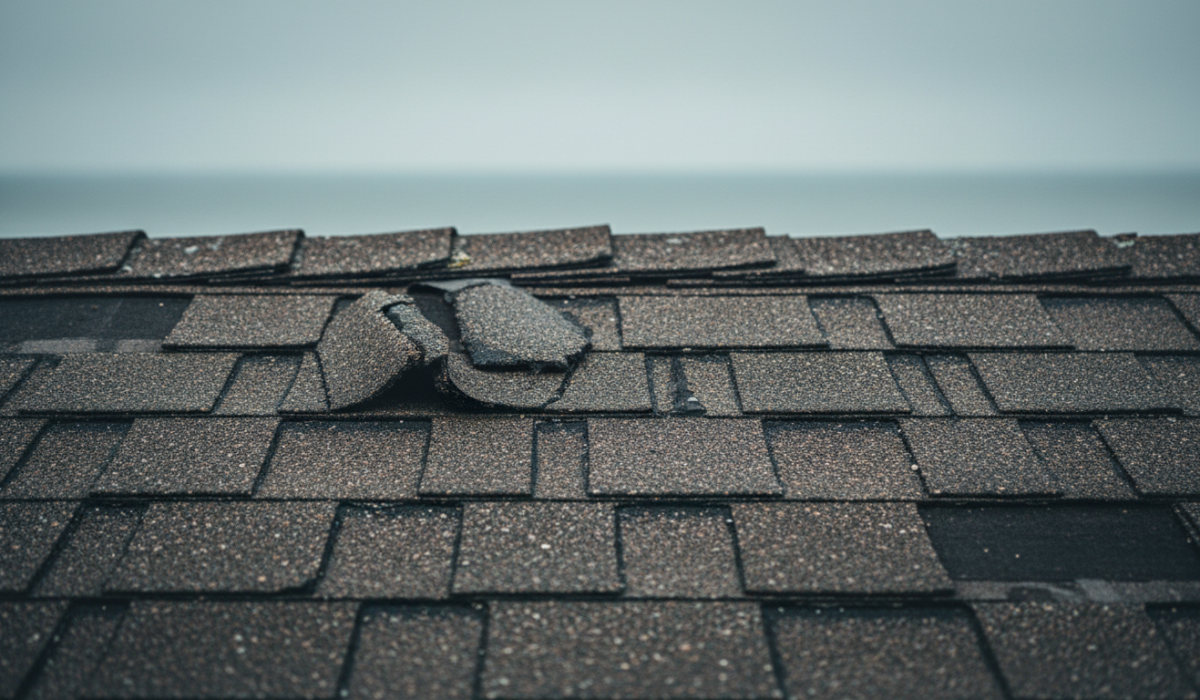
Take a look at your shingles, ideally with binoculars from the ground or by having a professional get up there. Shingles that are curling at the edges, cracking, or buckling are a clear sign the material is breaking down. As shingles age and weather, they lose their flexibility and their ability to seal out water, and that is exactly when they start to curl and crack.
A few damaged shingles can sometimes be repaired. But widespread curling and cracking across the roof is a different story. It means the material as a whole is worn out, and patching individual shingles on a roof that is failing everywhere is throwing money at a problem that needs a real solution.
3. Missing shingles or granules
Missing shingles leave your roof exposed exactly where you cannot afford it, and they tend to multiply once they start, especially with coastal wind in the mix. If you are finding shingles in your yard after storms, or seeing bare patches on the roof, the roof is losing its protective layer.
Granule loss is the subtler version of the same problem. Those granules protect the shingle from the elements, and as a roof ages it sheds them. A common sign is finding granules collecting in your gutters or at the bottom of downpouts, looking like coarse black sand. Significant granule loss means your shingles are wearing thin and nearing the end of their useful life.
4. Sagging anywhere on the roofline
This one is serious, and it is not something to put off. A roof that is sagging, dipping, or showing any kind of uneven line where it should be straight may have a structural problem underneath, often from water that has gotten in and damaged the decking or supports over time.
A sagging roof is not just a sign of age, it is a sign of potential structural compromise, and it can get worse fast, particularly under the added load of winter weather. If you see any sagging in your roofline, have it looked at promptly. This is the kind of problem you genuinely do not want to carry into a stormy season.
5. Leaks, water stains, or daylight in the attic
Signs of water getting inside are among the most direct evidence that your roof is no longer doing its job. Water stains on your ceilings or walls, especially ones that grow or reappear after rain, point to a roof that is letting moisture through. So does any sign of moisture, mould, or musty smell in the attic.
If you can get into your attic, look up during the day. Any daylight coming through the roof boards means there are gaps where water will follow. A single leak might be a repairable issue, but multiple leaks, or leaks that keep coming back after repairs, usually mean the roof has reached the point where replacement makes more sense than chasing one failure after another. (You can run through a complete assessment yourself using our comprehensive roof inspection checklist article).
6. Persistent moss and trapped moisture
On the coast, heavy moss is a fact of roofing life, but when it becomes thick and entrenched, it is both a symptom and a cause of a failing roof. Moss holds water against the surface, works its way under and between shingles, and lifts them so they can no longer seal out water. A roof buried under heavy moss growth is a roof under constant moisture attack.
Light moss can be cleaned and managed. But if your roof is heavily overgrown and the shingles underneath are already aged and damaged, the moss is often a sign that the roof has been deteriorating for a long time. At that stage, cleaning alone will not save a roof that is already worn out beneath it.
7. Rising energy bills or a roof that just looks tired
Sometimes the signs are subtler. A roof that is failing can let heat escape and moisture in, and you may notice it as creeping energy bills or a home that is harder to keep comfortable. While many things affect energy use, an aging, compromised roof can be a quiet contributor.
And sometimes you can simply see it. A roof that looks worn, patchy, discoloured, and tired from the curb, with an uneven, aged appearance across the whole surface, is often a roof that is telling you the truth about its condition. Trust what you see. A roof that looks done usually is.
Why timing it before winter matters so much
You might be tempted to wait and see if the roof makes it through one more season. On the coast, that is a gamble with poor odds and high stakes. A roof replaced on your schedule, in better weather, is a planned project with time to choose your materials and contractor properly. A roof that fails in a winter storm is an emergency, with water already in your home, stressful timing, and far less room to make good decisions.
Replacing a roof that is clearly at the end of its life before the wet season is simply the smart, lower-stress, often lower-cost path. You control the timing instead of the weather controlling it for you.
Frequently asked questions
How do I know if I need a repair or a full replacement?
It comes down to whether the problems are isolated or widespread. A few damaged shingles or a single leak may be repairable. Widespread curling, cracking, granule loss, multiple leaks, or an aged roof showing several of these signs at once usually point to replacement being the better long-term value.
Is sagging in my roof an emergency?
It is something to address promptly. Sagging can indicate structural damage beneath the surface, often from long-term water intrusion, and it can worsen under winter weather loads. Have any sagging in your roofline assessed without delay. You can find more detail on your structural options on our dedicated roof replacement service page.
Can I just keep repairing my old roof?
Up to a point. But once a roof is showing widespread wear and you are repairing one failure after another, you are often spending good money on a roof that needs replacing. There comes a stage where replacement is more cost-effective than continued patching.
Why replace a roof before winter rather than after?
Because a planned replacement in better weather lets you choose materials and timing on your terms, while a roof that fails mid-winter becomes a stressful, costly emergency with water already inside. Acting before the wet season puts you in control.
The bottom line
Your roof usually warns you before it fails. Age, curling and missing shingles, granule loss, sagging, leaks, heavy moss, and a generally worn appearance are all signs that it may not have another coastal winter in it. If you are seeing several of these, the smart move is to act now, while you still control the timing, rather than waiting for a storm to make the decision for you.
Not sure how much life your roof has left? Shoreline Roofing offers honest assessments and will tell you straight whether you are looking at a simple repair or a replacement. Head over to our request a quote or contact page to get in touch before the wet season hits, and head into winter with total confidence.