
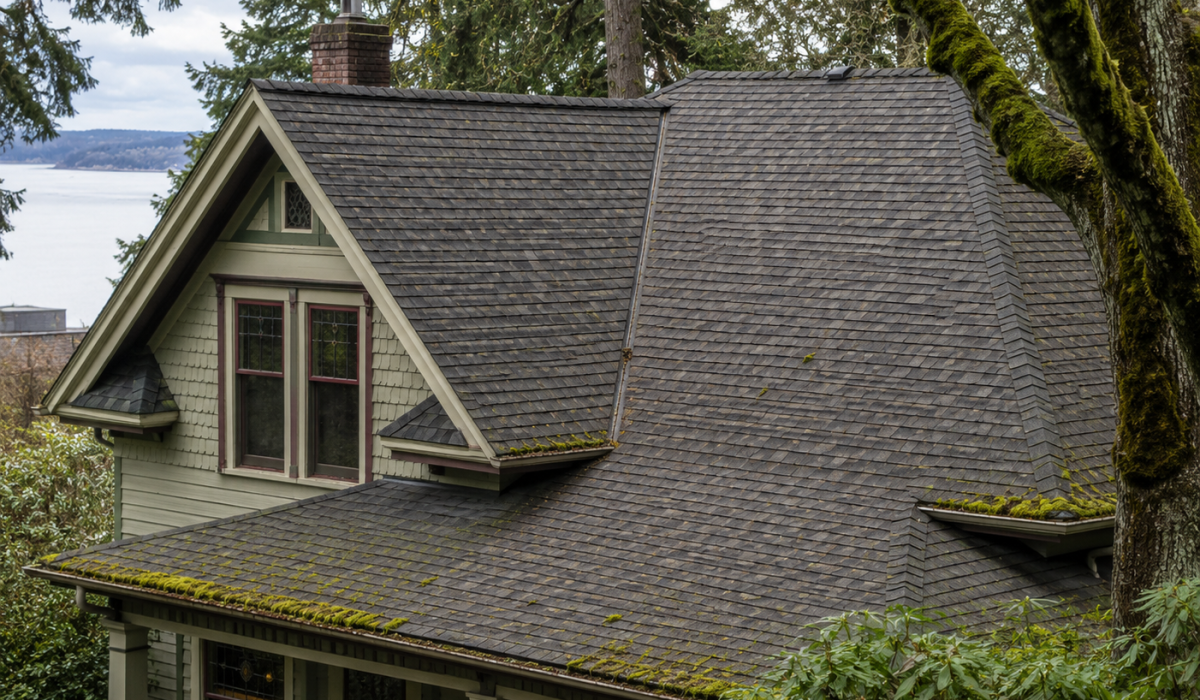
If you own a home in Victoria, it is worth knowing roughly how many years you have left on your roof. Planning ahead means you replace on your own timeline rather than scrambling after a leak, and you can budget for it instead of being caught off guard. The honest answer to how long a roof lasts is that it depends on the material and, just as importantly, on where you live.
That second part matters a lot in Victoria. Our coastal climate and the heavy tree cover across much of the region are tougher on roofs than the conditions in drier parts of Canada. A roof that might reach 25 years in a dry prairie city often does not get there here. This guide walks through how long each common roofing material lasts in Victoria specifically, why our climate ages roofs faster, how moss and shade shorten that lifespan, the signs your roof is nearing the end, and how to get more years out of it.
Average Roof Lifespan by Material in Victoria’s Climate
Manufacturer lifespan ratings assume average conditions. In Victoria’s damp, shaded environment, real-world lifespans tend to land at the lower end of those ratings unless the roof is well maintained. Here is what to realistically expect:
Asphalt shingles, by far the most common roof in Victoria, are also the most affected by our climate. Metal and torch-on hold up best against moisture, which is part of why they are popular choices for owners who want to replace less often. Cedar looks beautiful but is vulnerable to the damp and needs diligent upkeep to reach its potential.
| Material | Typical lifespan elsewhere | Realistic Victoria lifespan |
| Asphalt shingles | 20 to 25 years | 15 to 22 years |
| Architectural shingles | 25 to 30 years | 20 to 28 years |
| Metal roofing | 40 to 50+ years | 40 to 50 years |
| Cedar shake | 25 to 40 years | 20 to 30 years |
| Torch-on (flat roofs) | 20 to 30 years | 20 to 30 years |
Why Roofs in Victoria Age Differently Than in Drier Cities
A roof in Calgary or Kamloops lives a very different life than one in Victoria. Dry interior climates are hard on roofs in their own way, with intense sun and big temperature swings, but they lack the one thing that wears a coastal roof down fastest: constant moisture.
Victoria roofs spend much of the year damp. Months of steady rain, high humidity, and surfaces that rarely dry out fully create the perfect conditions for organic growth and slow material breakdown. Water that lingers in shaded areas works into small gaps, and the repeated wet-dry cycling stresses shingles and seals over time. None of this is dramatic on any single day, but over years it adds up to meaningfully shorter lifespans than the same roof would see in a dry climate. Understanding that is the key to planning realistically rather than assuming you will get the full manufacturer rating.
How Moss, Moisture, and Shade Reduce Roof Lifespan
This is the heart of why Victoria roofs need extra attention. Three local realities work together to shorten roof life:
Moss and algae. Victoria’s damp, shaded roofs are ideal for moss. It is not just cosmetic. Moss holds moisture against the shingles, lifts and separates them as it grows, and traps water where it can work underneath. Left unchecked, moss can take years off an asphalt roof.
Persistent moisture. Surfaces that never fully dry break down faster. Constant dampness degrades the asphalt and granules on shingles and keeps any small vulnerability wet, which accelerates wear.
Tree shade. Much of Victoria sits under mature tree canopy, which is lovely but hard on roofs. Shaded sections dry slowly, encouraging moss and rot. Overhanging branches drop debris and needles that hold moisture, and they scrape the surface in wind.
A roof on the sunny, open side of a house will often outlast the same roof on a shaded, tree-covered side by years. If your home sits among tall trees, expect to be more proactive with cleaning and inspection to protect your investment.
Signs Your Roof Is Nearing the End of Its Life
Age is a guide, but the roof itself tells you more. Look for these signs that yours is approaching replacement:
Curling, cupping, or cracking shingles across larger areas rather than one spot.
Bald patches where the protective granules have worn off, often with granules collecting in your gutters.
Persistent moss growth that keeps returning after cleaning.
Daylight visible through the attic roof boards, or signs of moisture and mould in the attic.
Sagging areas, which can indicate moisture damage to the decking beneath.
Leaks or interior stains that recur even after repairs.
A roof that is simply at or past its realistic Victoria lifespan for the material.
One or two minor issues may just call for a repair. Several of these together, especially on an older roof, point toward replacement.
How to Extend Your Roof’s Lifespan With Maintenance
The good news is that a Victoria roof, properly cared for, can reach the upper end of its realistic lifespan rather than the lower. A few habits make the difference:
Keep moss in check. Have moss removed properly before it takes hold, and consider treatments that discourage regrowth. Do not pressure-wash asphalt shingles, which strips the granules and does more harm than good.
Clear debris and gutters. Remove leaves, needles, and branches that trap moisture, and keep gutters flowing so water drains away rather than backing up.
Trim overhanging branches. Cutting back trees lets shaded sections dry out and reduces debris and abrasion.
Schedule regular inspections. A professional check every year or two catches small problems while they are still cheap to fix and verifies your roof is on track for its full lifespan.
Address small issues promptly. A lifted shingle or minor flashing gap fixed early prevents the moisture intrusion that shortens a roof’s life.
When to Stop Repairing and Start Replacing
There comes a point where continued repairs stop making financial sense. A useful way to decide is to weigh the roof’s age and condition against the cost of ongoing fixes. If your roof is well within its lifespan and the problem is localized, repair is almost always the right call. But if it is near or past its realistic Victoria lifespan and you are facing recurring leaks or widespread wear, you are likely spending good money on a roof that will need replacing soon regardless.
A simple test: if the cost of repairs over a couple of years starts approaching a meaningful share of a replacement, or if you are repairing the same roof repeatedly, replacement is usually the smarter investment. A new roof also resets your maintenance clock, improves energy efficiency, and adds value if you are thinking about selling. An honest professional assessment will tell you clearly which side of that line you are on.
FAQ
Does roof age affect my home insurance?
It can. Some insurers ask about roof age and condition, and an older roof near the end of its life may affect coverage or premiums. A roof in good, documented condition is easier to insure. Keeping records of inspections and maintenance helps, and replacing a roof that is past its lifespan can sometimes improve your insurance position.
Should I replace my roof before selling my home in Victoria?
If your roof is near the end of its life, replacing it before selling can make the home easier to sell and reduce buyer hesitation, since roof condition is a common point in home inspections here. If the roof has years left and is well maintained, documentation of its condition is usually enough. It comes down to age, condition, and your timeline.
Does a roof warranty mean it will last that long?
Not exactly. A material warranty covers defects in the product, not the realistic lifespan in your specific climate. In Victoria’s damp, shaded conditions, a roof may need replacement before a long warranty period is up, especially without maintenance. Read warranties carefully, and pay attention to the workmanship warranty from your installer as well as the material warranty.
Schedule a Free Roof Lifespan Assessment
If you are wondering how many years your roof has left, the best way to know is to have it assessed by someone who understands Victoria roofs. Planning ahead puts you in control, so you can budget and replace on your terms rather than reacting to a leak.
Shoreline Roofing has more than 30 years of experience caring for roofs across Greater Victoria. We know exactly how our coastal moisture and tree cover affect different materials, and we will give you an honest read on your roof’s condition and remaining lifespan with no pressure. Reach out today to schedule your free roof lifespan assessment and find out where your roof really stands.