
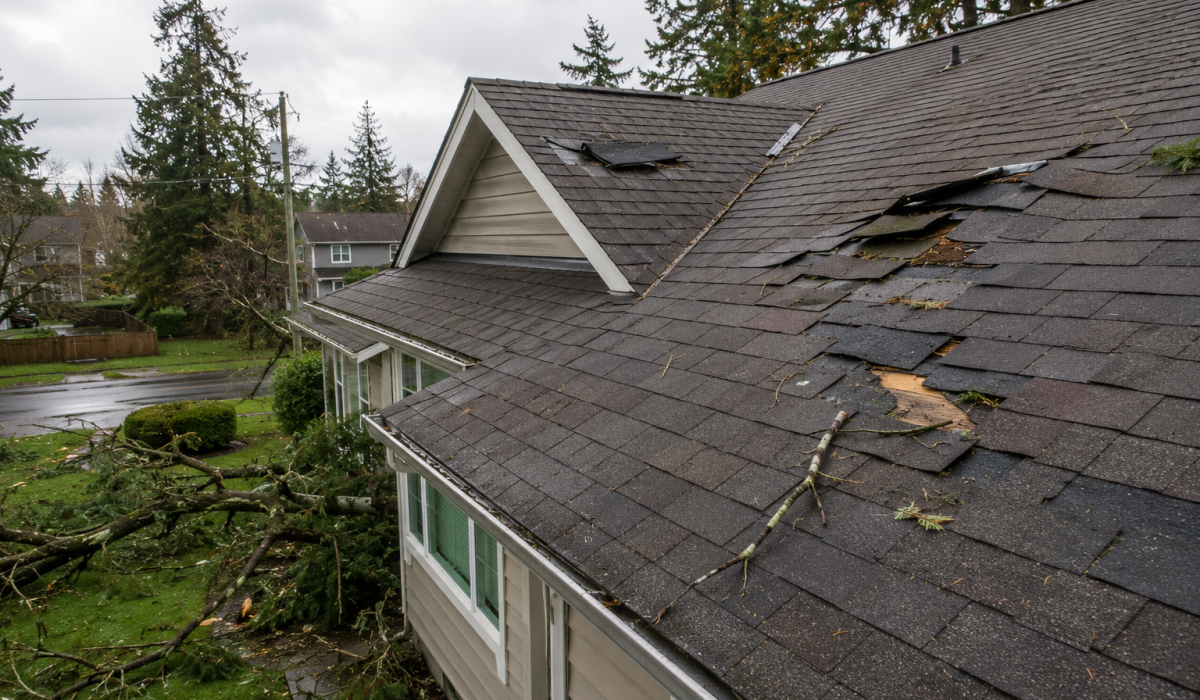
Victoria gets its share of serious windstorms through the fall and winter, and after a bad one, checking your roof is worth doing even if nothing seems obviously wrong. A lot of storm damage is not dramatic. It shows up as a few lifted shingles, a bent piece of flashing, or debris that punctured something small enough not to be visible from the ground, and small damage left unaddressed becomes a bigger repair by the next storm.
What to check from the ground, safely
Before considering getting on the roof at all, which is not something we recommend for most homeowners after a storm given wet, unstable conditions, a lot can be assessed safely from the ground with binoculars or simply walking the property perimeter.
Shingles visibly missing, lifted at the edges, or lying in the yard
Granules collecting in gutters or downspout runoff, more than the usual small amount
Visible dents or damage on metal flashing, vents, or gutters
Broken or hanging tree limbs directly over or touching the roof
Any obvious puncture or hole visible from ground level
Gutters pulled away from the fascia or sagging noticeably
What to check inside the house
Storm damage sometimes shows up indoors before it is obvious outside. A walk through the attic with a flashlight, checking for any new staining, damp insulation, or actual light coming through the deck where it should not be, catches issues that are not visible from a ground-level exterior check.
Ceiling stains in any room, particularly ones that appeared suddenly rather than gradually, are worth investigating promptly rather than waiting to see if they get worse.
Debris and its actual risk
A single branch resting on a roof is usually not an emergency, but branches that have punctured shingles, are actively resting weight on a section of roof, or are tangled with power lines need professional attention rather than DIY removal.
Removing storm debris yourself, especially anything larger than small twigs and leaves, from a wet or unstable roof surface carries real fall risk and is better left to a professional who can assess the underlying roof condition at the same time.
Common types of wind damage and what they actually mean
Lifted or creased shingles Wind can lift shingle edges without fully detaching them, breaking the seal strip that normally holds them flat. These often do not blow off entirely but no longer seal properly, leaving a gap where wind-driven rain can work underneath during the next storm. This kind of damage is easy to miss from a casual ground inspection since the shingle is still technically in place.
Missing shingles The most visible damage type, and while a single missing shingle might seem minor, it exposes the underlayment and deck directly to weather at that spot, which needs addressing promptly rather than waiting for a larger repair to become convenient.
Flashing damage Wind can bend, loosen, or detach flashing around chimneys, vents, and roof valleys, which is a less visible but equally serious issue, since flashing failure is one of the more common sources of leaks even on an otherwise intact roof.
Granule loss Heavy wind and wind-driven debris can strip granules from shingle surfaces even without fully dislodging them, which accelerates aging and UV vulnerability on the affected section even though the roof might look fine at a casual glance.
When to call for a professional inspection versus handling it yourself
A quick ground-level visual check after any significant storm is reasonable for any homeowner to do.
Getting on the roof itself, assessing flashing condition up close, or evaluating whether damage is significant enough to warrant an insurance claim are all better handled by a professional, both for safety and because storm damage assessments often benefit from photo documentation and a clear written report if an insurance claim ends up being part of the process.
Assessing damage on different roof ages
A roof’s age affects how a given storm impacts it. An older roof already nearing the end of its service life is more vulnerable to storm damage becoming a serious problem, since aged shingles have less remaining flexibility and adhesion to withstand wind lift compared to a newer roof.
This means the same storm can cause meaningfully different outcomes on two homes on the same street depending on roof age and condition, and it is part of why an older roof, even one that seemed fine before the storm, deserves a closer look afterward than a roof installed within the last several years.
Documenting damage properly, even minor damage
Photographing any visible damage promptly after a storm, from the ground and, once professionally inspected, from the roof itself, creates a record that is useful whether or not a claim ends up being filed.
Dating the photos and keeping them together with any professional inspection report means that if damage worsens over subsequent storms, there is a clear record of what existed and when, which can matter for both insurance purposes and simply understanding how a repair need evolved over time.
What a professional storm damage inspection actually involves
A thorough inspection typically covers the full roof surface for lifted, cracked, or missing shingles, a check of all flashing points around chimneys, vents, and skylights, gutters and downspouts for damage or detachment, and an attic-side check for any signs of water intrusion that may not yet be visible from outside.
The inspector should provide clear documentation, photos and a written summary, of anything found, which serves both as a record for your own reference and as supporting material if an insurance claim becomes necessary.
Insurance considerations after storm damage
Most homeowner insurance policies cover storm damage to roofs, but documentation matters. Photos of visible damage, a professional inspection report, and prompt reporting after the storm all strengthen a claim.
Waiting weeks or months to address visible damage can complicate a claim later, since insurers may question whether the damage occurred during the storm in question or developed afterward from an unaddressed issue.
Frequently asked questions
How soon after a storm should I check my roof? As soon as it is safe to do so, typically once winds have died down and any standing water or debris has cleared enough for a safe ground-level walk around the property. Getting on the roof itself should wait for a professional rather than being attempted immediately after a storm.
Is a few missing shingles really worth calling someone about? Yes. Even a small area of exposed deck is vulnerable to water intrusion with the next rain, and what starts as a simple shingle replacement becomes a larger repair if left exposed through additional weather.
Will my insurance cover storm damage roof repairs? Most policies do cover storm-related roof damage, though specifics vary by policy. Prompt documentation and a professional inspection report generally support a smoother claims process.
How do I know if damage is from this storm or something older? This can be genuinely difficult to determine without professional assessment, particularly for damage like granule loss or minor flashing issues that develop gradually. A professional inspection, ideally soon after a storm while conditions are fresh, gives the clearest picture.
Does an older roof need a different inspection approach after a storm? It benefits from a somewhat more thorough look, since aged shingles have less remaining resilience against wind and impact than a newer roof, meaning the same storm event can cause proportionally more damage on an older roof nearing the end of its service life.
Should I get a second opinion if an inspection finds no damage? If you have specific concerns, staining that appeared after the storm, for instance, a second opinion is reasonable. Most reputable inspections are thorough, but a second look never hurts if something still feels unresolved after the first assessment.
If you want your roof checked after a recent windstorm, Shoreline Roofing can do a full inspection, document any damage, and give you a clear picture of what, if anything, needs to be repaired.