
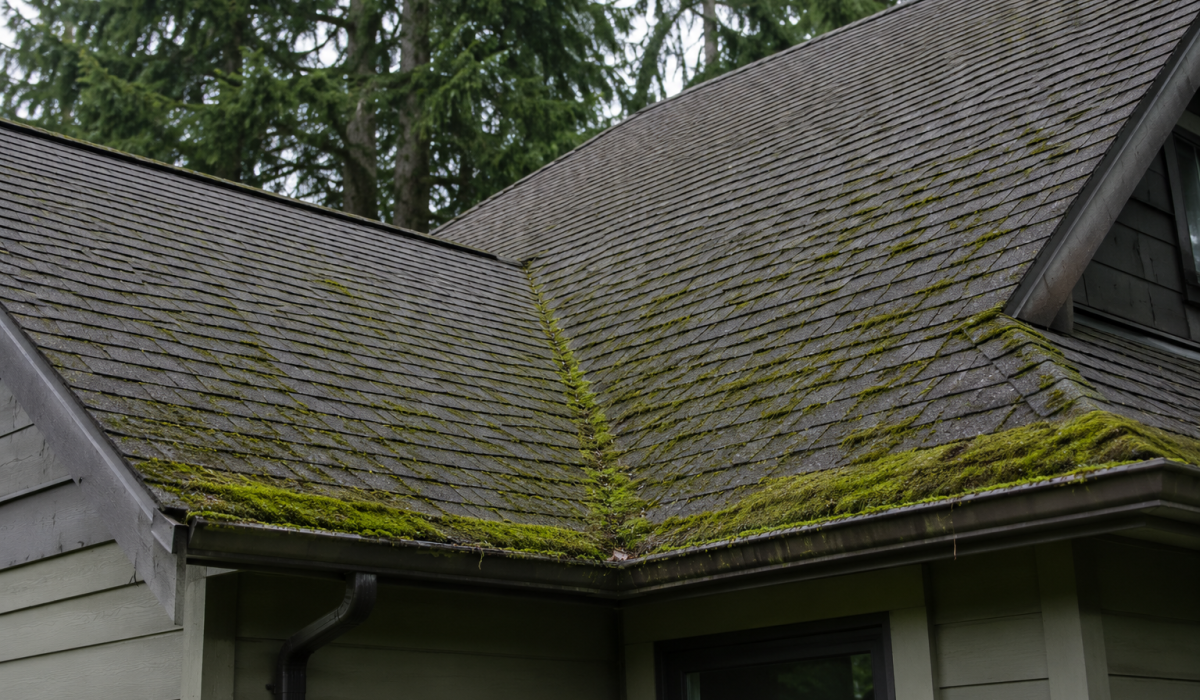
If you own a home in Victoria with any shaded roof area, moss is not a matter of if but when. Our combination of consistent moisture, mild temperatures, and heavy tree cover across the region creates close to ideal growing conditions on north-facing slopes and anywhere shingles stay damp longer than they get direct sun. Moss and algae are mostly a cosmetic problem in the early stages, but left unaddressed for years, they genuinely shorten a roof’s usable life.
Why moss actually damages a roof, not just how it looks
Moss holds moisture directly against the shingle surface far longer than the shingle would otherwise stay wet, which accelerates granule loss and shingle degradation over time. As moss establishes and grows, its root-like structures, called rhizoids, work into the shingle surface and can lift edges slightly, creating small gaps where wind-driven rain can work underneath.
In more advanced cases, moss growing thick enough in valleys or along eaves can actually redirect water flow, contributing to localized pooling or backup that would not occur on a clean roof surface.
Algae, the dark streaking often mistaken for dirt or mold, is less structurally damaging than moss but affects curb appeal significantly and, since it feeds on the limestone filler in many shingles, can gradually affect the shingle’s granule coating over a long enough timeline as well.
Why it concentrates on certain roof sections
Moss and algae both need sustained moisture and reduced direct sunlight to establish and spread. North-facing slopes, areas shaded by overhanging trees, and valleys where water naturally collects and drains slower are the classic hot spots.
A roof with mature trees close by, common across many established Victoria neighbourhoods, is going to see moss develop faster and more persistently than an open, sun-exposed roof of the same age and material.
Safe removal: what to do and what to avoid
The instinct to pressure wash moss off is understandable and is exactly the wrong approach. High pressure water directed at asphalt shingles strips the protective granule layer along with the moss, which does more long-term damage to the roof than the moss itself was causing.
Proper moss removal uses a soft wash approach, low pressure application of a cleaning solution followed by gentle rinsing, or in some cases manual removal with a soft brush from someone experienced enough to do it without damaging the shingle surface underneath.
Walking on a mossy or wet roof also carries real fall risk. Moss creates a genuinely slick surface even for someone experienced on roofs, which is part of why moss removal is worth having done professionally rather than as a DIY weekend project, both for the roof’s protection and for basic safety.
Prevention: keeping it from coming back
Zinc or copper strips Installed along the ridge, these metals release trace amounts of metal ions with each rainfall that inhibit moss and algae growth on the shingle surface below, without requiring any ongoing homeowner action. This is one of the more effective long-term prevention methods and is often installed during a reroof or added afterward as a standalone upgrade.
Trimming back overhanging branches Increasing direct sunlight and airflow to a shaded roof section meaningfully slows moss and algae regrowth, since both need the shade and moisture that overhanging branches help create and maintain. This is one of the simplest and most cost-effective prevention steps available.
Keeping gutters and valleys clear Debris buildup holds moisture against the roof surface longer and gives moss an easier foothold to establish. Regular gutter cleaning, particularly heading into and through the wet season, reduces one of the conditions moss depends on to get started.
Algae-resistant shingles on future reroofs Modern algae-resistant shingles include copper granules mixed into the surface specifically to resist algae growth, and while not a complete moss prevention solution on their own, they meaningfully reduce algae staining compared to standard shingles, worth considering when the time comes for a full reroof.
Moss on different roofing materials
Moss growth patterns and removal considerations differ somewhat by roofing material. Asphalt shingles are the most susceptible to the granule-stripping damage described above, since moss rhizoids work directly into the granule surface.
Cedar shake and shingle roofs, still present on some older Victoria homes, are actually more vulnerable to moisture-related wood rot from established moss than asphalt is to granule loss, making prompt moss management especially important on that roofing type.
Metal and tile roofs generally resist moss establishment better due to their smoother, less porous surface, though moss can still accumulate in seams, valleys, and around fasteners even on these more resistant materials.
Why some Victoria neighborhoods see it worse than others
Mature tree canopy varies significantly between established and newer Victoria neighborhoods, and older, heavily treed areas see meaningfully more moss pressure on their roofs than newer developments with younger, smaller trees and less overall canopy coverage.
This is not something a homeowner can change quickly. Tree removal is a significant decision with its own tradeoffs, which is part of why prevention methods like zinc strips and diligent gutter maintenance matter more in these areas than in a newer, more open subdivision.
How often moss should actually be addressed
For roofs with a known moss tendency, shaded, tree-covered lots especially, an annual check and light cleaning as needed keeps growth from ever reaching the point where it is affecting shingle integrity rather than just appearance.
Waiting several years between any attention allows moss to establish more deeply and makes eventual removal more involved, and increases the chance some shingle damage has already occurred by the time it gets addressed.
Moss removal timing relative to a planned re-roof
If a reroof is already on the horizon within the next year or two, it is worth discussing moss condition as part of that planning conversation rather than paying for a standalone moss removal treatment shortly before the roof is replaced anyway.
On the other hand, if a reroof is several years out, addressing established moss now protects the remaining service life of the current roof rather than letting it deteriorate faster than necessary in the meantime. A roofing professional can give a straightforward opinion on which approach makes more sense for your specific roof’s age and condition.
Frequently asked questions
Can I remove roof moss myself? It is possible, but the combination of fall risk on a slick, mossy roof and the real risk of damaging shingles with improper technique or pressure washing makes this a task most homeowners are better off having done professionally.
Do zinc strips really work, or is that mostly marketing? They have a genuine, well-documented effect in slowing moss and algae regrowth, through the metal ions released with rainfall, though they work best as part of an overall prevention approach rather than a complete standalone fix for an already heavily mossed roof.
Is moss covered under a roof warranty? Generally no, moss and algae growth is considered a maintenance issue related to environmental conditions rather than a material or installation defect, so it typically falls outside both manufacturer and workmanship warranty coverage.
How urgent is moss removal, really? Early-stage moss is mostly cosmetic and not urgent. Thick, established moss that has been present for several years is worth addressing sooner, since the longer it sits, the more likely it has already begun affecting the shingle surface underneath.
Does moss removal need to happen at a specific time of year? Removal can generally happen anytime conditions are safe and dry enough for the work, though many homeowners schedule it in late spring or early fall, catching growth before the wettest months and before it has had a full winter to establish further.
Are cedar roofs more at risk from moss than asphalt shingle roofs? In terms of the type of damage, yes, moss-related moisture retention contributes to wood rot on cedar in a way that is arguably more structurally serious than the granule loss moss causes on asphalt shingles, making prompt attention especially worthwhile on cedar roofing.
If you have moss building up on a shaded roof section and want it removed safely, or want to talk through prevention options for your next reroof, Shoreline Roofing can take a look and give you a straightforward plan.